 |
| Credit: Wikimedia Commons |
A couple weeks ago on a Saturday evening a strange coincidence happened to me while riding the bus back home. I had just purchased the October 2019 issue of “Famous Monsters of Filmland”. For those of you who aren’t horror or sci fi movie cinephiles, “Famous Monsters” is a horror and sci fi news magazine started by the late Forrest (Forry) Ackerman. Anyway, in that magazine I was reading an article about the 1957 movie, “Curse of the Demon”. It said that the movie was actually based on a short story by M.R. James. That name struck me as strangely familiar.
I thought I remembered seeing the name in a story by Ramsey Campbell that I was reading only that morning while riding the bus to east Sacramento. So I checked the story in my copy of “Post Mortem: New Tales of Ghostly Horror”, the tales no longer being new because the book was published in the late 1980s. Sure enough M.R. James’ name was in Campbell’s story, “The Guide”. Because of this coincidence, I discovered a new horror author to read.
M.R. James Author of Ghost Stories
M.R. James was a Medieval studies scholar who wrote ghost stories in the early half of the 20th century. What distinguished him from other authors in the genre was that most of his stories were void of gothic conventions and set in modern settings. Still, his characters had strong antiquarian interests and so were lovers of ancient texts. And so many of these stories were centred around such texts.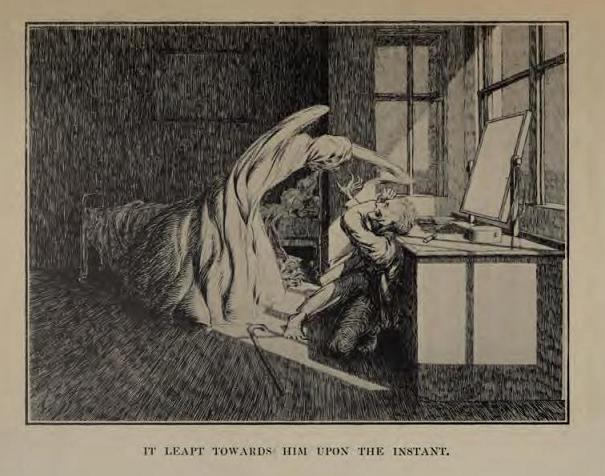
Credit: Wikimedia Commons
Authors Influenced By James’ Ghost Stories
James’ work influenced several other horror authors, namely H.P. Lovecraft and Ramsey Campbell. I admit, I have not read any of James’ work yet but definitely plan to. That’s the great thing about reading is that you can discover authors through other authors’ work and become a fan of them. But I’ve definitely read plenty of Lovecraft’s stories and some of Campbell’s. And I can see the influences of James in both of them. Lovecraft’s stories often involve ancient texts that reference and lead to ancient evils. Campbell’s “The Guide”, involves an antiquated travel guide book of a region in England where James had lived, the book having been written by James himself. It’s this guide book that leads to a sinister force.The James Ghost Story That Inspired a Movie
Besides influencing horror authors, James’ ghost stories also inspired some movies in which “Curse of the Demon” was one. The story that this movie is adapted from is “Casting the Runes” and, like many movie adaptions of fiction, is loosely based on it. In fact, according to the article I read in “Famous Monsters”, one of the producers went against the director’s plan to keep the demon from being shown in the film which would have been faithful to James’ style of storytelling: hinting at the monster’s presence but never fully revealing it. I’ve seen the movie and felt that it did a great job showing the demon in full. After all, it’s a movie and so all movies based on books are going to translate into imagery more than prose does.However, perhaps the monster was shown too soon and so weakened the suspenseful build-up to the climax. Part of what makes good horror is when the monster is hidden part of the time because what one doesn’t see but knows is there can be even more terrifying than when it’s seen. That’s what makes novels like H.G. Wells’ “The Invisible Man” so great. Speaking of which, I finished the book a few weeks ago and just saw the new movie earlier this evening. So, as I planned at the beginning of the year, I will have a Book-To-Movie on that in a couple of weeks.
And, eventually, I’ll be sure to have a Book-To-Movie for M.R. James’ “Casting the Runes” and its movie adaptation, “Curse of the Demon”. That is, after I have gotten a hold of a copy of James’ story and read it and gotten a hold of a copy of the movie and refreshed myself in watching it a second time. I’ll probably be doing more reading of James’ work as well. After all, in a single day, a book and a horror movie magasine introduced me to this author for a reason.
Do you discover authors through the works of other authors? Have you become an avid reader of any of them? Feel free to leave your answers and any other comments in the box below.
Until next time . . .
I've read some Lovecraft, so I'll have to check out James' work.
ReplyDeleteFamous Monsters is still around? Loved that magazine when I was a kid.
Famous Monsters had went out of circulation several years ago but then they brought it back a few years ago. However, they only come out with two or three issues a year I believe. But because they only offer a few issues each, year they put more content in each than they used to. Not all book stores and comic shops sell it though, so a person may be best ordering it at publications website.
Delete